

How Hyperbaric Oxygen Therapy Accelerates Altitude Acclimatization at 7,000 Feet in Taos
The physiological reality of high-altitude stress on tourists and aging residents—and how mHBOT hyper-saturates cellular fluids for rapid recovery.

Practitioner Commentary by Rebecca Harder
National Board Certified (IHA & IACT) | 23 Years Experience
Traveling to Taos means ascending from near sea level to 7,000 feet in town—and over 9,200 feet at the ski valley base. Having administered professional oxygen and terrain protocols to thousands of individuals over two decades, I consider mild hyperbaric oxygen therapy (mHBOT) to be one of the most efficient, non-medical tools available for high-altitude acclimatization.
At 7,000 feet, barometric pressure drops, delivering roughly 22% to 24% less oxygen per breath than at sea level. Whether you are a visitor arriving for a mountain vacation or a long-term resident navigating the physiological realities of aging at elevation, elevated oxygen support helps restore cellular stamina and bodily comfort.
High Country Applications: What Happens Inside the Body
As Dr. Dennis Lipton, an internist at Vail Valley Medical Center, notes: "There is about a third less oxygen at altitude, so our bodies have to adjust... We have to move more air through our lungs to extract enough oxygen, and our hearts have to pump harder to maintain adequate oxygen levels." While acute mountain sickness (AMS) causes headaches, nausea, travel fatigue, and brain fog in visitors, long-term aging residents face a different challenge: chronic subclinical strain. Dulled Hypoxic Ventilatory Response (HVR): As we age into our 60s, 70s, and 80s, brainstem chemoreceptors become less sensitive to lower oxygen levels. Older adults do not automatically hyperventilate to compensate, driving resting blood oxygen saturation down to 88%–92%. Increased Cardiac Workload: Loss of arterial elasticity requires the heart to work 15% to 20% harder at 7,000 feet just to maintain baseline cellular function. Nocturnal Hypoxia: Sleep architecture changes at high altitude often cause micro-awakenings, poor sleep restoration, and chronic daytime fatigue.
The Science of Hyperbaric Oxygen Saturation
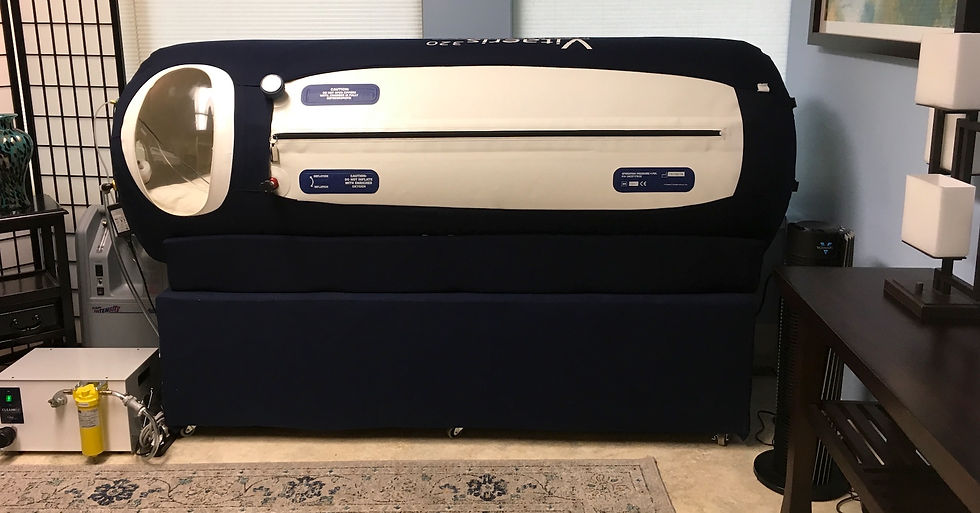
As sports medicine specialist Dr. Joel Dekanich explains regarding hyperbaric sessions: "By being in the chamber, we're going to lower the effects of where you're at by over 7,000 feet... It'll take you lower in altitude and also increase the oxygen-carrying capacity of cells simultaneously. You're going to hyper-saturate your red blood cells with oxygen—not only that, but all the other fluids in your body." By placing the body under gentle atmospheric pressure inside an mHBOT suite, oxygen is forced directly into blood plasma, lymphatic fluid, and central nervous system fluids. This rapid increase in tissue oxygenation provides immediate relief from altitude headaches, travel fatigue, and post-activity muscle soreness. A Note on High-Altitude Sickness in TaosClinical studies in high-altitude medicine reveal that 27% of visitors experience altitude sickness symptoms at town level (7,000 ft), and up to 42% are affected at higher mountain base elevations (9,200 ft). Truly Terrain operates dual hyperbaric chamber suites in the Taos Historic District—always keeping one suite reserved for incoming tourists and last-minute arrivals seeking altitude relief.
Peer-Reviewed References & Scientific Citations (For Educational Use Only)
Honigman, B., et al. (1993). "Acute Mountain Sickness in a General Tourist Population at Moderate Altitudes." Annals of Internal Medicine, 118(8), 587–592.
Bu, C., et al. (2021). "Hyperbaric Oxygen Preconditioning for Prevention of Acute High-Altitude Diseases." Frontiers in Physiology, 12, 781250.
Flower, T. (2017). "Hyperbaric Oxygen Chamber Helps Patients Heal In The High Country." Vail Daily News (Featuring Dr. Joel Dekanich & Dr. Dennis Lipton).
Journal of Emergency Medical Services (JEMS). (2016). "Hyperbaric Chambers in the Management of High-Altitude Hypoxia and Edema." JEMS, June 2016 Issue.
West, J. B. (2012). "High-Altitude Medicine and Physiology." CRC Press, 5th Edition.
New Mexico Safe Harbor Notice
All content published by Truly Terrain is provided for educational and informational purposes only. Rebecca Harder is an Unlicensed and Highly Experienced Wellness Practitioner—providing science based well being resources, services and wisdom. Services do not constitute medical diagnosis, treatment, or prescription.
Comments